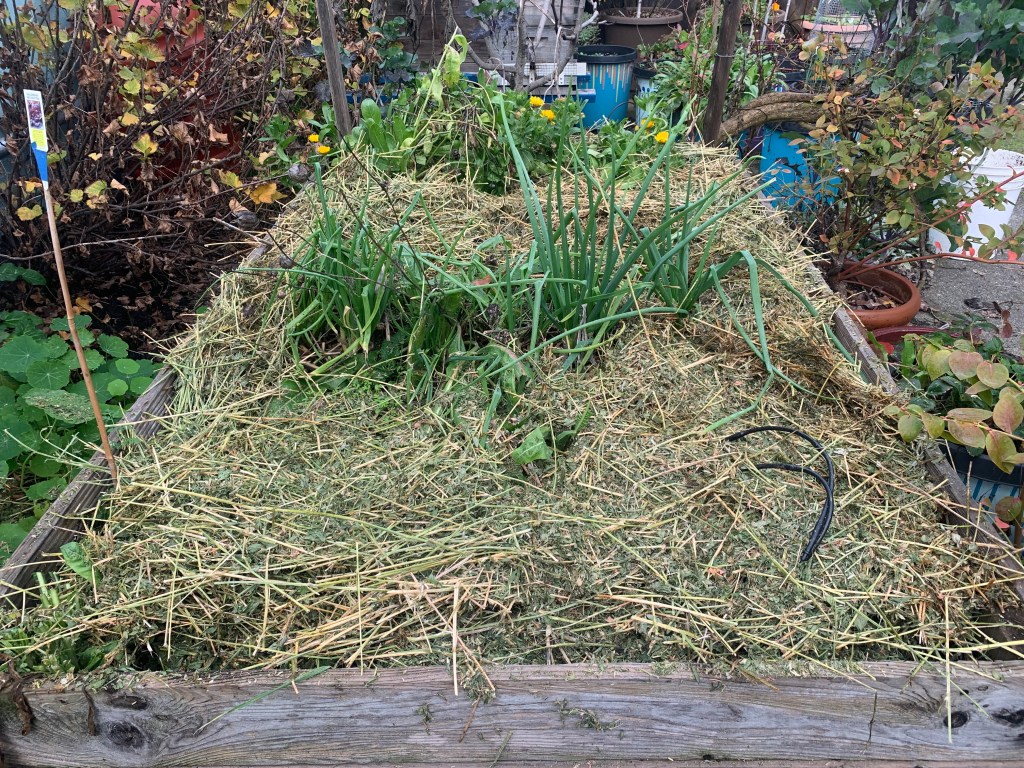
For many gardeners away from the equator, winter is not our favorite season. The short days are gray and cold, and the soil is often soggy or covered with snow. It can be a depressing time of the year for all of us, and especially people living with seasonal affective disorder. But I remind myself that this season is just as important for the garden as the others. The soils are recharging with moisture, and the soil microbiome is still doing its thing under the soil level. We have some moments to brew an antioxidant-rich hot beverage (coffee, green tea, and hibiscus tea, to name a few) while perusing the seed catalogues, and to plan for our spring and summer gardens. One topic that’s on my mind this week is mulching. I’m a big fan of covering the bare soil with mulch of some kind so that it breaks down over the winter and feeds the soil food web. Similarly to our own bodies, feeding the soil microbiome loads of plant material is key to a healthy garden. Commonly used mulches are hay, straw, compost, and even arborist mulch (broken down branches and leaves), particularly around our fruit bushes and trees. This year I bought a big bale of organic alfalfa hay and put a thick layer on many of our veggie beds. While it may have some weed seeds in it, it should add a lot of nitrogen to the beds to lessen or obviate the need for manure-based compost in the garden. It’s a lot of work, hauling mulch around the garden! But that’s one of the great things of gardening as a healthy habit – it can be something that nudges us off the sofa and out of the house, twelve months of the year. Thanks for reading, and good luck in the garden.
 Jeffrey M Pierce, MD